Small Creators at Scale: The Highest-Performing Influencer Strategy
Why microinfluencers at scale outperform other influencer strategies—and how to run these campaigns effectively.

Leon Lin
Co-founder & CEO
9/30/2026
•
8 min read
Introduction
At 1stCollab, we’ve seen hundreds of brands deploy millions of dollars of spend to test a diverse range of influencer marketing strategies. Across these strategies, we’ve consistently seen one influencer strategy stand out as the best performing–working with microinfluencers at scale. Below is a breakdown of why this strategy works, the main operational challenges, and how brands execute it successfully.
The Effectiveness of Microinfluencers
Say you have a $25k budget to spend on an influencer marketing campaign. Are you better off working with 1-2 of the larger creators in your niche or dozens of smaller, cheaper creators?
Here are charts that show how creators in different price buckets perform on a CPM (cost per 1000 views) and CPC (cost per click) basis:
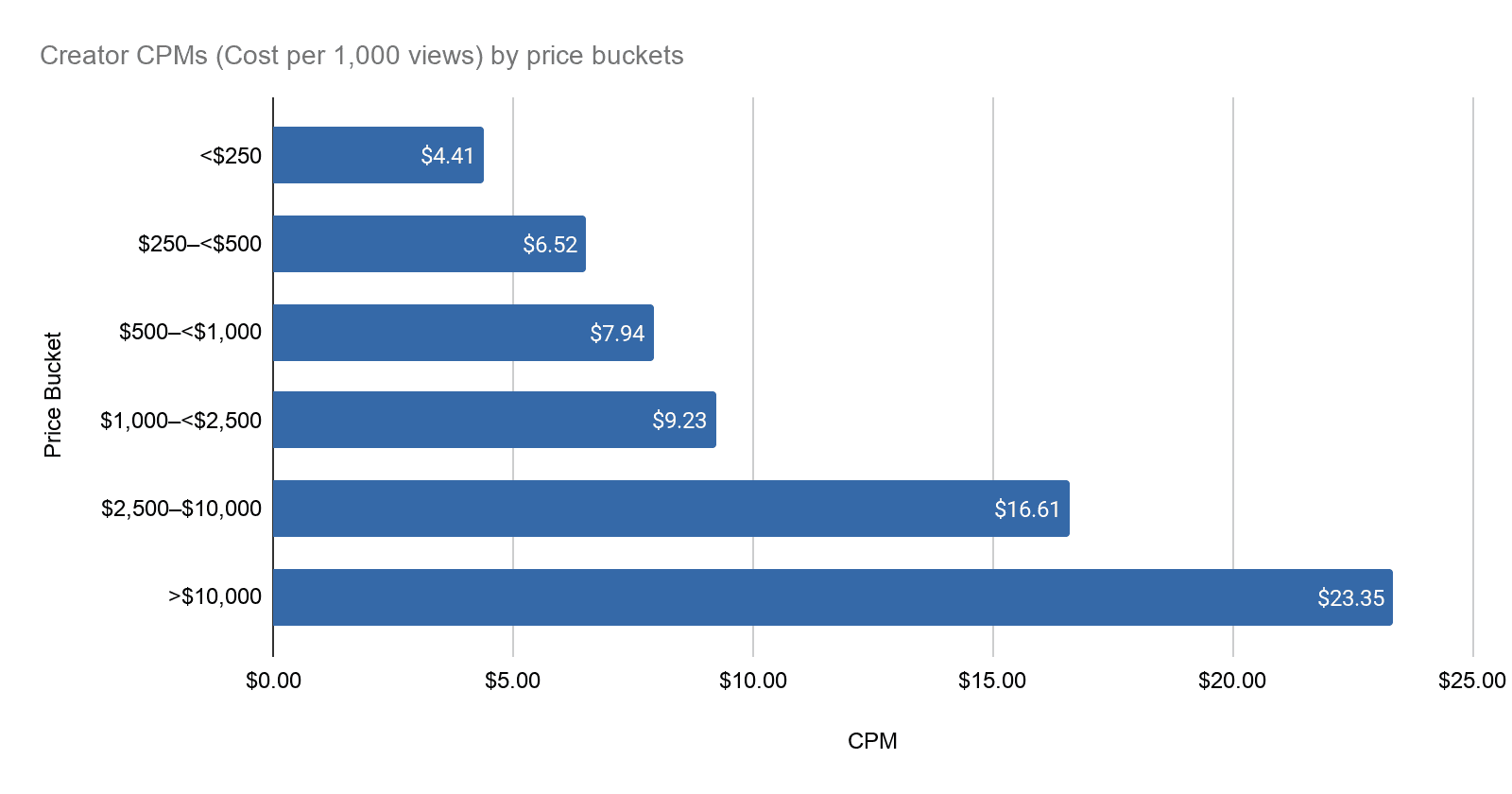
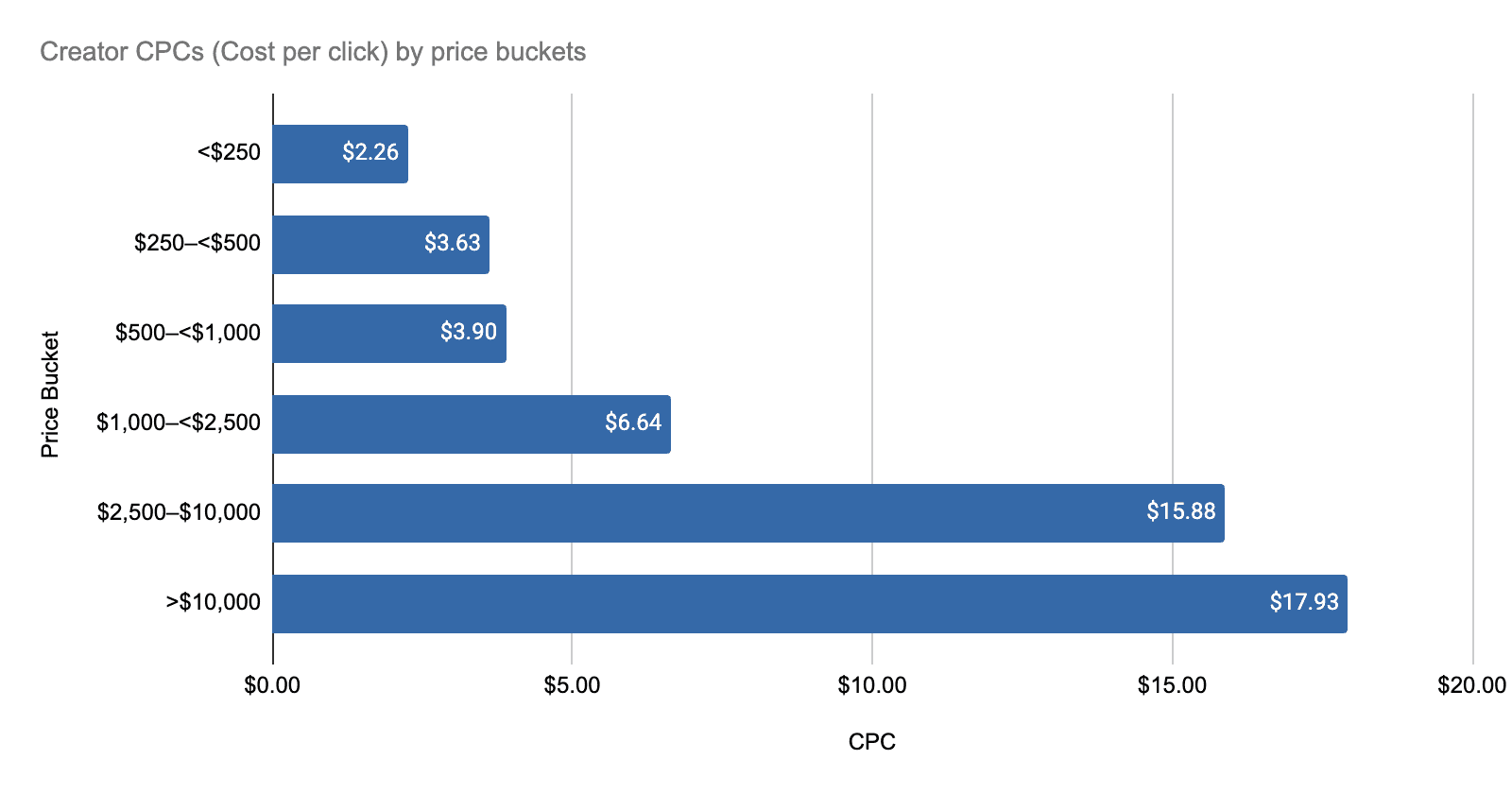
Across these campaigns, cheaper microinfluencers generated dramatically better CPMs and CPCs than macrocreators:
Creators under $250 averaged a $4.41 CPM, compared to $23.35 for creators over $10,000 (over 5x better performance).
Creators under $250 averaged a $2.26 CPC, compared to $17.93 for creators over $10,000 (over 8x better performance).
Viral Content is The Goal of Influencer Marketing
To understand why microinfluencers work so well, we first need to define what success means for an influencer marketing campaign.
Most traditional measures of success for influencer campaigns borrow from metrics we see across most digital advertising channels: Positive ROAS / ROI or efficiency at driving engagement at different parts of the funnel, such as CPM, CPC, or CPA.
In practice though, we see that success usually boils down to one question: As a brand, am I getting viral content in my campaign? When a brand is able to get viral content in a campaign, the rest of the metrics, whether it’s impression, traffic, or conversions, take care of themselves. [1]
As a concrete example, here’s a screenshot of a real campaign we’re currently running that’s representative of a typical scaled influencer campaign:
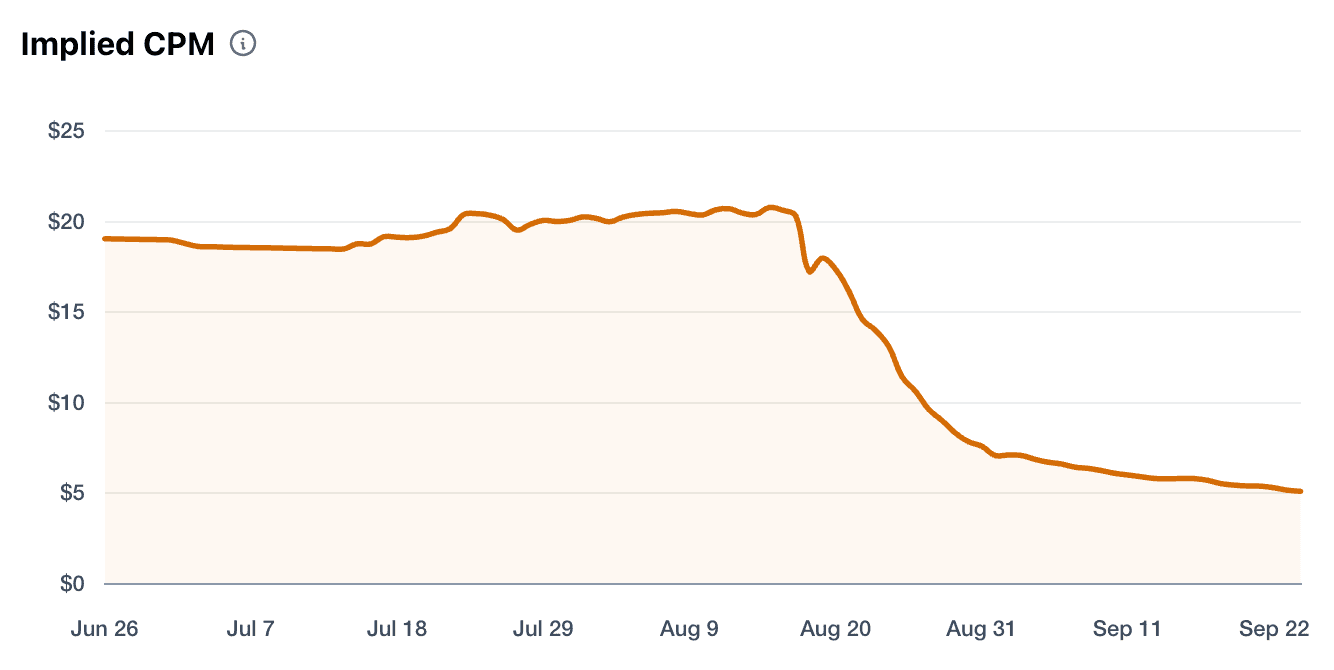
Prior to mid-August, this campaign had over 50 live posts and an average CPM around $20. Once a single post went viral, overall CPM dropped by over 75% to $5. In influencer marketing, performance is usually driven by whether a campaign secures viral outlier content.
Defining Viral Content
For this analysis, a top-performing post is defined as reaching at least 250,000 views or 250 clicks.
Why Smaller Creators Outperform Larger Creators
On modern social media platforms, recommendation algorithms now mean any creator can go viral. While larger creators have higher individual chances of creating a top-performing post, their higher cost means brands get far fewer attempts per dollar spent.
Let’s dive into the data to understand why this is true. The chart below shows the likelihood that a creator will make a viral video at different price buckets.
Cost group | >250 clicks | >250k views |
|---|---|---|
$100–$200 | 2.3% | 1.0% |
$1k–$2k | 8.2% | 9.7% |
$10k–$20k | 41.9% | 51.6% |
As expected, a creator that is in the $10k-$20k range hits these thresholds far more frequently than creators in lower price buckets. For example, a creator that is $10-$20k will get you 250 clicks 42% of the time. A creator in the $100-$200 range only gets you more than 250 clicks 2.3% of the time.
However, with a $25,000 budget, a brand can either hire 1-2 creators in the $10,000–$20,000 range or 100+ creators in the $100–$200 range. While the single larger creator offers a ~42% chance of driving >250 clicks, spreading that budget across 100 microinfluencers increases the overall probability of generating top-performing content to over 90%.
So your chances of running a successful influencer campaign increase significantly through deploying your budget across a broad range of smaller creators than better on just a few larger creators.
Microinfluencer Campaigns Only Work At Scale
A very common mistake many brands make is thinking that microinfluencer campaigns can succeed on a small budget. In order to ensure you’re able to get viral content in your campaign, you need to make sure you have sufficient budget to take enough “shots on goal”. In other words, you need to work with a high volume of influencers to give your campaign a good shot at success.
Why Microinfluencer Campaigns Aren’t Effective With Small Budgets
On an individual post level, median CPMs across price tiers are fairly similar (hovering around $50). The advantage of microinfluencers does not come from a single post outperforming a macrocreator, but from the cumulative probability of hitting outliers across many posts.
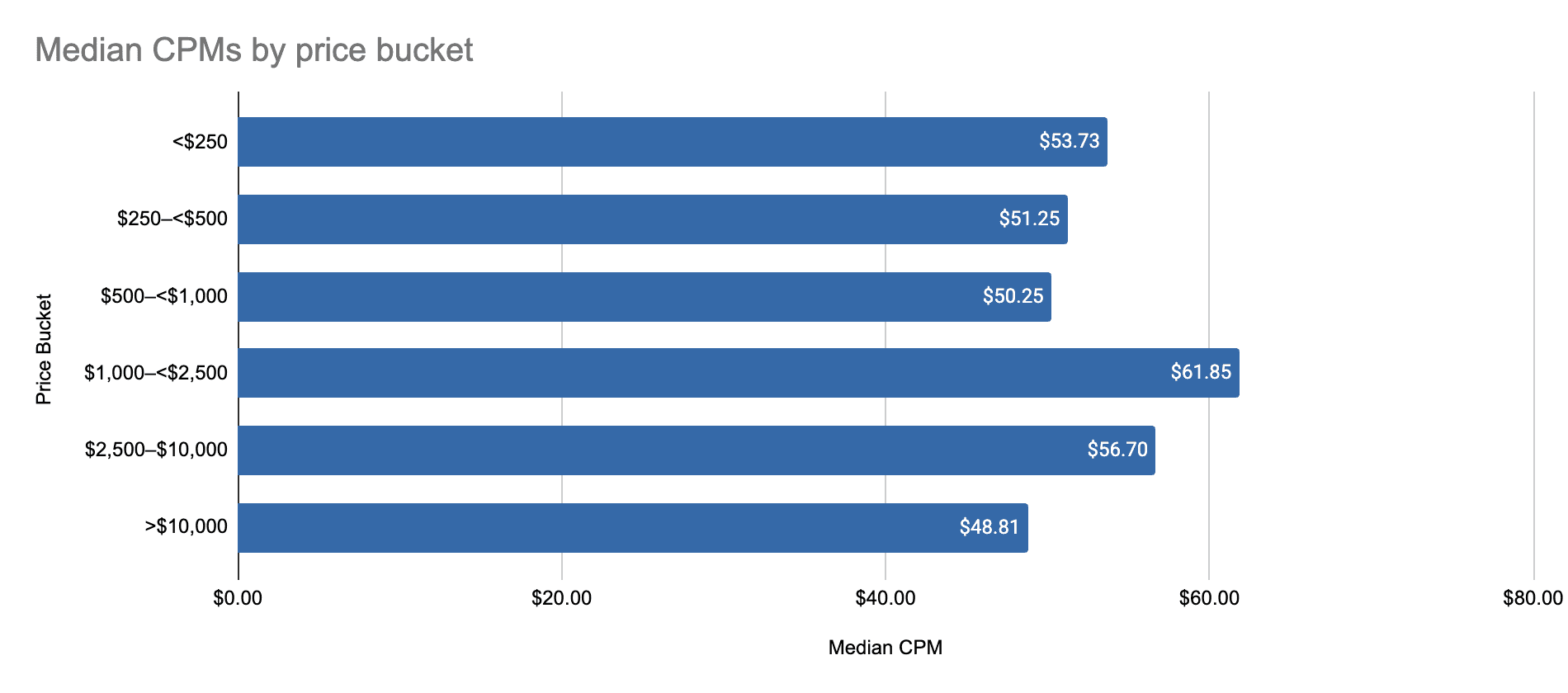
The main takeaway is that only a scaled team of microinfluencers outperforms a larger creator. A microinfluencer campaign can only really give you a high probability of success if you take many shots on goal.
For creators in the $100–$200 range, individual top-performance probability is low (~2.3% for >250 clicks), but aggregate probability scales rapidly with volume:
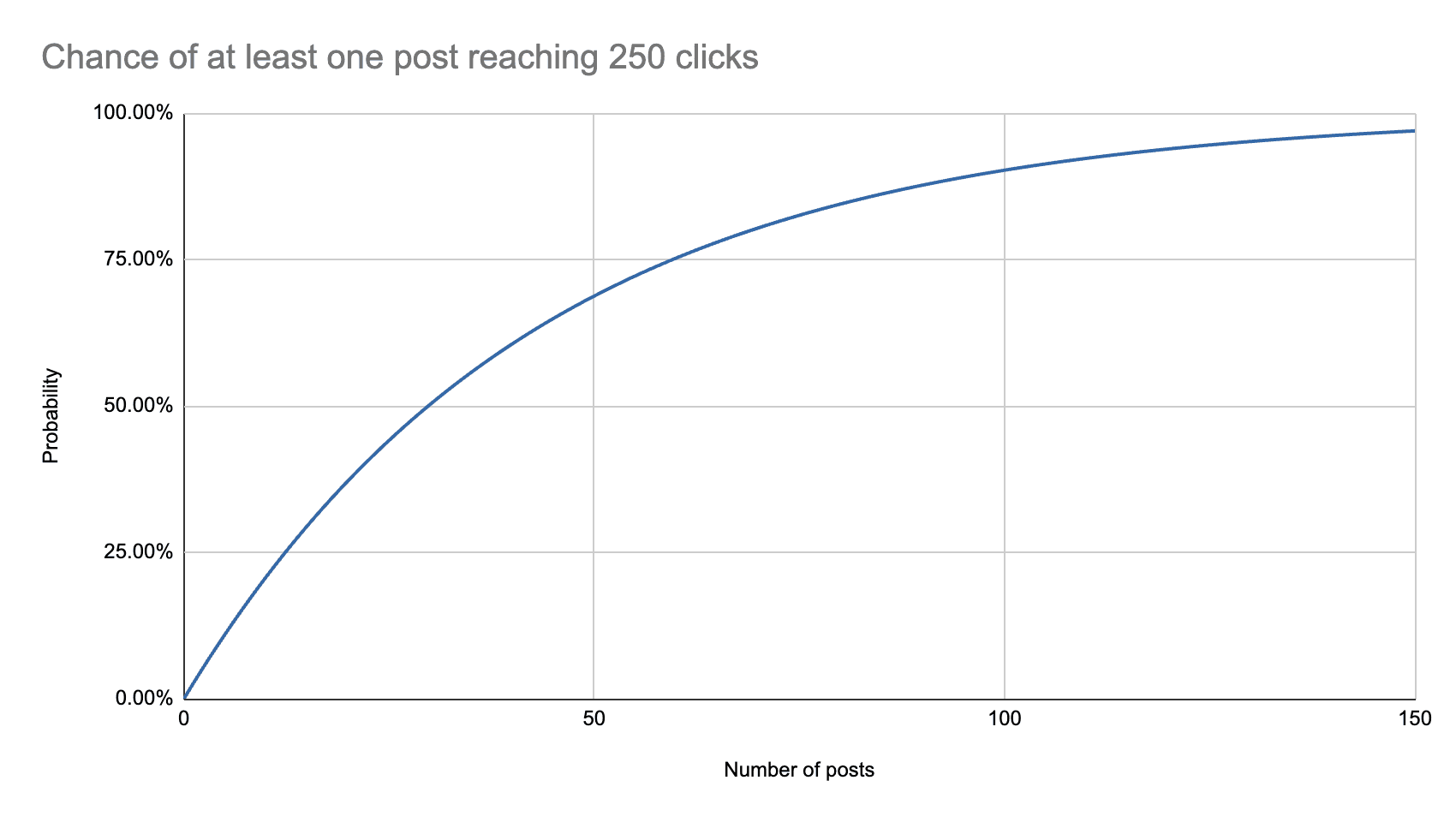
As the chart shows, your chances of getting at least one viral video in your campaign increases to:
25% with 13 posts.
50% with 30 posts.
90% with 99 posts.
Allocating enough budget for around 30 microinfluencers gives a campaign at least a 50% chance of securing a viral post.
The Challenges of Running Scaled Influencer Campaigns
Despite the statistical advantage, managing 100 individual microinfluencer partnerships introduces significant operational overhead compared to working with a single macrocreator.
That’s because there are two other significant costs associated with running scaled microinfluencer campaigns beyond the price you pay influencers:
Coordination: More creators mean more conversations, approvals, contracts, and payments. With the typical influencer partnership taking 100+ messages to complete, working with hundreds of influencers can require a team of influencer marketers. And those headcount costs can quickly eat into the savings on content.
Sourcing: Finding enough relevant creators at the right price takes work, especially in a narrow niche. Working with 100 microinfluencers might mean sourcing and outreaching to thousands of potential candidates. That means brands targeting specific audiences can never scale a microinfluencer strategy since there’s a limit to how many relevant creators exist.
How Brands Execute Scaled Microinfluencer Strategies
To capture the performance benefits of smaller creators without overwhelming operations, brands typically use two main approaches:
First, brands will usually blend together a combination of cheaper, microinfluencers with occasional larger creators as well. Our recommendation is that brands should continue to work with more expensive creators when that creator’s content and audience is particularly relevant to the brand’s target audience and if the creator’s price is fair relative to their predicted engagement. There are certainly large creators that can still drive outsized performance for a campaign, but brands should more closely evaluate these larger deals before deciding to move forward.
Second, brands can amortize the cost of working with many creators by creating processes that scale through automation. Standardizing and automating repetitive processes such as sourcing, outreach, contracting and payments can significantly reduce the cost of working with dozens of creators.
The quickest way to automate many of these processes is to leverage an influencer marketing platform that has prebuilt workflows to help brands scale their influencer campaigns. We’d of course recommend 1stCollab, a platform we’ve built to specialize in running large scale influencer campaigns and have helped hundreds of brands run these types of campaigns. We know that these campaigns are what perform best so have tailored our entire platform to be the best solution in the market for running scaled influencer campaigns.
If you’re interested in learning more about how to run a scaled microinfluencer strategy and how 1stCollab can help, schedule a call with us here.
The Data
The findings in this post are based on creator spend data from campaigns executed on 1stCollab, covering:
The most recent $1M of creator spend within each pricing bucket. That collectively represented over 10k total pieces of content.
Evaluated deals across 100+ brands, each with their own unique pricing strategy, creative requirements, and success metrics.
Notes
1. The notion of finding a rare outcome with an outsized gain to justify an investment isn’t something that’s unique to influencer marketing. In Venture Capital investing, this is a fund finding the “unicorn” or “fund returner” investment. Hollywood calls this the “tentpole blockbuster”. Pharmaceutical companies are constantly trying to find the “blockbuster drug”. And mining companies are always searching for the “wildcat discovery”.